How Heat Changes Titanium (And Why It’s So Cool)
Titanium isn’t just another shiny metal—it’s a shape-shifter. Strong, lightweight, and resistant to corrosion, titanium is famous in industries from jet engines to jewelry. But what really makes it special? At 882°C (1619.6°F), titanium changes its internal structure like a metal superhero, unlocking a world of possibilities for alloy design.
So, What’s This Transformation About?
At lower temperatures, titanium chills in its alpha phase—a neat, hexagonally packed structure. But once it hits that magic 882°C, everything changes. It switches to the beta phase, where atoms rearrange into a looser, body-centered cubic structure. Think of it like shifting from a tight-knit group photo to a freestyle dance circle. This transformation is called an allotropic change, and it’s the key to titanium’s versatility.
Why Should You Care?
This shape-shifting trick lets engineers and makers customize titanium to suit all kinds of needs. Depending on how you mix it with other elements and treat it, you can end up with one of three types of alloys:
-
Alpha Alloys – Tough and corrosion-resistant, these guys don’t mind staying stable at room temperature. They’re great for marine parts, airframe panels, and anywhere you need serious durability.
-
Beta Alloys – More flexible and heat-treatable, beta alloys are the go-to for high-strength parts. They shine in aerospace fasteners and structural components.
-
Alpha-Beta Alloys – The dynamic duo. These combine strength and formability, and can be heat-treated for even more performance. Ti-6Al-4V is the rockstar here—strong, tough, and used everywhere.
Heat It, Treat It, Shape It
Thanks to this allotropic magic, titanium is super responsive to heat treatment. By heating it up and cooling it down just right, you can tweak its grain structure, make it harder, or give it more flexibility. Add in some mechanical processing—like forging or rolling—and you get an even finer microstructure. That’s why it’s used in everything from jet turbine blades to custom multitools.
Where You’ll See It
-
Aerospace: Think jet engines, landing gear, and structural components. Titanium keeps planes light and strong.
-
Medical: It’s biocompatible, which means it plays nice with your body. Perfect for implants and surgical tools.
-
Gadgets & Gear: Watches, eyeglasses, and those sleek EDC tools—titanium is the choice for stylish durability.
-
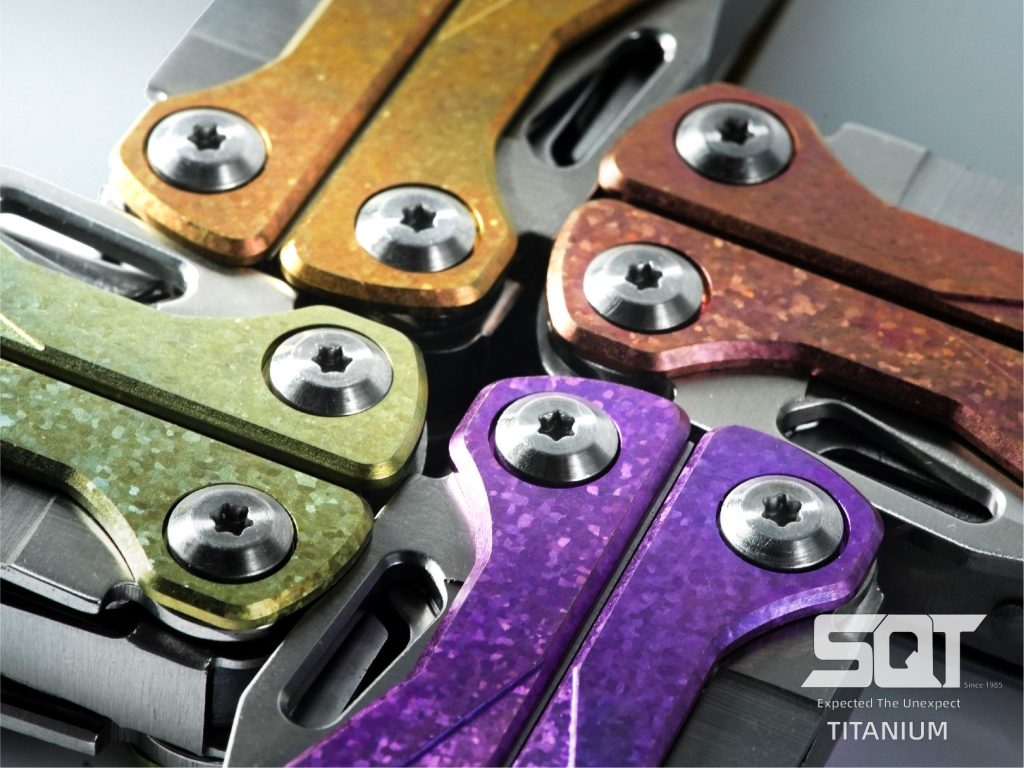
Art & Design: Makers love how it can be colored and shaped, especially through anodizing. It’s metal with personality.
Wrapping It Up
Titanium’s phase change at 882°C might sound like a geeky detail, but it’s the reason this metal is such a powerhouse. Whether you’re building aircraft, crafting a high-end multitool, or just geeking out over materials science, knowing how titanium behaves under heat gives you a serious edge.
If you are interested in DIY anodizing of titanium Please see post
📍 Meet Us in Person!
We’ll be at the United Arab Emirates Riyadh International Convention and Exhibition Center (RICEC)
from 16 – 18 June 2025.
Come visit our booth Stand No – 1C31,
chat with our team, and check out our titanium projects up close. We’d love to see you there!